13 min read
Garry Tan's argument about personal AGI is easy to misunderstand if the phrase is taken literally.
He is not mainly claiming that every person should train a frontier model or build a machine with general intelligence in the science-fiction sense.
His practical point is simpler:
The intelligence you build through years of using an agent should become an asset you control
A normal AI subscription gives you access to a model and a product interface.
A personal intelligence system keeps accumulating the context, memory, procedures, and working methods that make the model useful to one particular person.
That distinction matters because models are becoming easier to switch.
Your history is not.
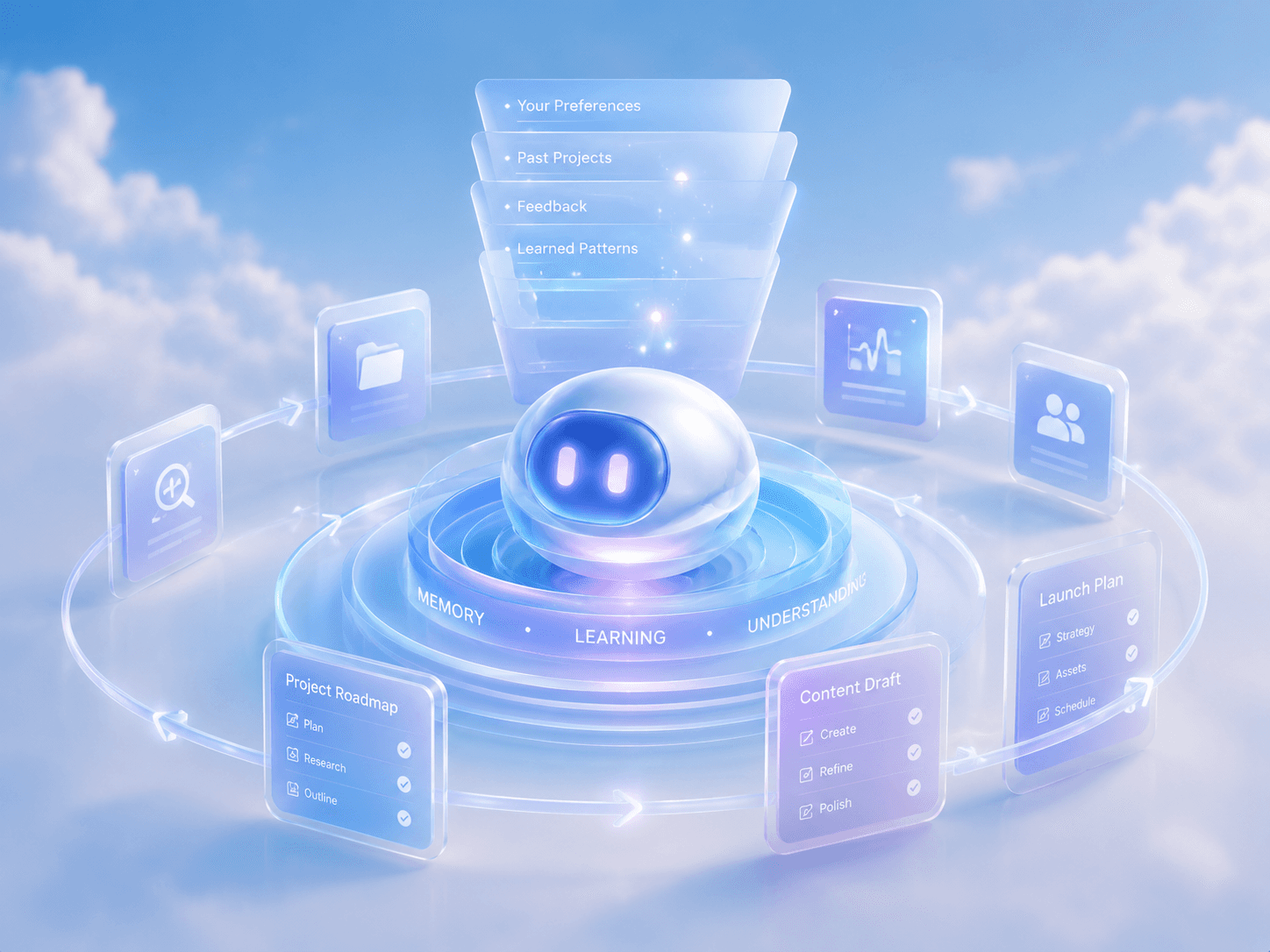
The model is only one part of the system
A useful personal agent has several layers.
The model
The model provides general reasoning, language, and tool-use ability.
It may be rented from a provider. It may change as better or cheaper models become available.
Your context
This includes the information that makes a generic model relevant to your work:
your projects;
your decisions;
your relationships;
your preferences;
your documents;
your conversation history;
your corrections;
your current priorities.
Your skills
Skills are repeatable methods.
They preserve how you research, prepare, decide, write, review, or execute a particular kind of work.
The harness
The harness connects the model to memory, skills, tools, files, applications, schedules, and execution environments.
Hermes Agent is one example of that harness.
It supports persistent memory, reusable skills, connected tools, scheduled tasks, multiple agent profiles, messaging platforms, and different model providers.
The important part of the personal AGI argument is that these layers should not all disappear when a vendor changes its product.
Renting intelligence is not automatically bad
There is nothing wrong with paying for access to a strong model.
Most people should not train their own model or run every part of the infrastructure themselves.
The problem is not renting compute or inference.
The problem is losing everything personal around it.
Imagine spending a year teaching an AI:
how you evaluate companies;
how you prepare for meetings;
how you structure a decision;
how you communicate with customers;
how you review candidates;
how you run your weekly planning;
which sources you trust;
which mistakes you repeatedly avoid.
Then the product changes direction or you move to another provider.
Can you take that accumulated intelligence with you?
An export of old conversations is not enough.
A conversation is a record of what happened.
A skill is a reusable method.
A memory system is a curated model of what still matters.
Ownership means retaining those layers in a form you can inspect, edit, move, and continue using.
Why skills matter more than prompts
Prompts are useful, but they are often treated as if they were the durable asset.
They are usually not.
A prompt can say:
Research this investor and prepare me for the meeting
A real workflow has more structure.
It may specify:
which sources to inspect;
how to find prior interactions;
how to identify relevant portfolio companies;
how to judge fit;
which risks to flag;
what a complete answer includes;
how to cite the evidence;
how the final brief should be organized.
That is closer to a small operating manual than a prompt.
Hermes skills are designed to store this procedural knowledge. They can include instructions, references, templates, scripts, pitfalls, and verification steps. They can also be portable and shared through open skill formats and registries.
This is what makes a skill library valuable over time.
After several months, a founder might have:
an investor meeting prep skill;
a company research skill;
a weekly review skill;
a candidate screen;
a customer follow-up process;
a deck review skill;
a vendor evaluation method;
a writing style skill.
Those are not merely examples of past output.
They are externalized working methods.
Hermes fits the personal AGI model well
Hermes is useful in this framing because it does not treat the model as the whole product.
The official system includes:
persistent bounded memory;
searchable session history;
agent-managed procedural skills;
scheduled work;
connected tools and MCP servers;
multiple profiles with separate state;
several model providers and execution environments;
messaging access across many platforms.
That gives the user a system around the model.
The system can keep the useful context and procedures even when the underlying model changes.
This does not mean every part is automatically portable today. Product design still matters. Credentials, integrations, stored files, and hosted services can create lock-in if the product does not give the user clear export and deletion controls.
But the architecture makes a more portable personal system possible.
A chat-first product can still support ownership
There is an apparent conflict between ownership and ease of use.
The most controllable systems often require terminals, configuration files, servers, keys, and manual setup.
The easiest products often hide everything inside a hosted account.
The iHermes experience is meant to bridge those two worlds.
The user starts in Messages:
Help me prepare for investor meetings
Hermes asks for the context it needs and sends secure connection links.
The user does not have to configure a gateway or edit a skill file.
But the product should still make the important assets visible and controllable:
what Hermes remembers;
which conversations are searchable;
which skills exist;
how a skill changed;
which sources are connected;
which actions are allowed;
how to export or delete the data;
which model or deployment mode is being used.
Ease of use should remove technical setup.
It should not remove user control.
What ownership should mean in practice
The word ownership can become vague. It needs concrete product requirements.
A user should be able to:
Inspect memory
See what Hermes believes is important and correct or remove it.
Review skill changes
Understand what procedure is being saved or updated.
Export skills
Keep a copy in an open format that can be used elsewhere.
Separate personal and shared context
Sharing a workflow should not automatically share the private data that created it.
Choose models over time
The user's accumulated system should not be tied to one model provider forever.
Delete the system
The user should be able to remove memory, sessions, connections, and hosted state.
Move to private deployment
Advanced users and companies should have a path to run the agent on infrastructure they control.
That is a much more useful definition of ownership than saying a product is open source while all of the user's actual working state remains trapped in a hosted database.
Share the method without sharing the person
The most interesting extension of personal skill ownership is selective sharing.
Suppose a founder has refined an excellent investor meeting process over several months.
They may want to share the method without sharing:
their inbox;
their investor list;
their confidential notes;
their company data;
their credentials;
their personal memory.
A shared skill should contain the procedure, not the private context.
Another user can install the skill, connect their own sources, and adapt the workflow to their own preferences.
This creates a practical form of collective intelligence.
One person spends months finding a reliable method. Another person does not have to start from zero.
The second user can improve their personal version without changing the original public version.
The value can compound across users while the underlying private data stays separate.
The employment question is real
Tan's ownership argument becomes more complicated inside a company.
If an employee develops a valuable skill while doing company work, who owns it?
The answer may depend on employment agreements, company policy, trade-secret rules, and the specific content of the skill.
There is no honest one-line answer.
A sensible product should separate:
personal working preferences;
general professional methods;
company-specific processes;
confidential company context;
customer data;
jointly developed workflows.
The system should make the scope visible.
A skill that says "put the recommendation first" is different from a skill containing a company's private pricing strategy or customer-selection model.
Personal AGI should not become an excuse to ignore legitimate company ownership and confidentiality.
It should make the boundary easier to understand and manage.
Curation is part of ownership
A large memory and skill library can become a liability.
Old assumptions stay active.
Duplicate skills compete with each other.
A workflow that worked once gets treated as a general rule.
A personal intelligence system therefore needs maintenance:
memory review;
source provenance;
skill versioning;
testing;
archiving;
rollback;
deletion;
clear permission history.
Hermes includes bounded memory and tools for updating skills. It also has background systems that can suggest skill improvements and archive stale agent-created skills.
The user should still be able to review the result.
Ownership is not only the right to keep the files.
It is the ability to understand and govern what is inside them.
Personal AGI should increase your ability to act
The most useful part of Tan's framing is not the word AGI.
It is the focus on leverage.
A personal system should make one person better able to:
prepare;
decide;
create;
remember;
coordinate;
follow through;
learn from repeated work.
That does not require an agent that knows everything.
It requires an agent that becomes reliably better at a growing set of jobs that matter to one person.
The model provides broad intelligence.
Your context gives it relevance.
Your skills give it repeatability.
The harness gives it the ability to act.
Ownership makes the improvement yours.
A practical 30-day path
Week 1: Build the base
Connect the minimum sources for one valuable workflow. Set communication preferences and action boundaries.
Week 2: Correct real work
Use Hermes for meeting preparation, research, follow-through, or another repeated job. Correct the process and output.
Week 3: Preserve the method
Turn the reliable workflow into a skill. Set up one scheduled routine.
Week 4: Review ownership
Inspect what Hermes remembers. Export the skill. Remove stale context. Decide which parts are personal, which are private to a company, and which could be shared.
At the end of the month, the goal is not to claim that you built AGI.
The goal is to have a system that knows more useful context, handles a few workflows reliably, and leaves you with assets you can continue improving.
The practical meaning of owning your intelligence
You do not need to own every GPU.
You do not need to train the frontier model.
You do need control over the parts that become uniquely valuable because of your work.
That includes:
the context you approved;
the memory you curated;
the skills you refined;
the history behind important decisions;
the ability to edit, export, delete, and move those assets;
the freedom to change the model underneath them.
The model is powerful.
The accumulated system around the model is personal.
That is the part worth owning.
Start Building Intelligence That Stays With You
Use Hermes for real work and keep the context, memory, and skills that become valuable.